Tata Power Renewable Energy Limited commissioned 419 MW of utility-scale projects in Q2 FY27, representing over 130 percent year-on-year growth compared with 182 MW in the corresponding quarter of the previous year. It also executed 131.2 MWhr of storage projects, of which 101.2 MWhr was for in-house use and 30 MWhr for third parties. For the first half of FY27 the company executed 645 MW of utility-scale capacity and 161.2 MWhr of storage.
Key projects commissioned in the half included the 100.8 MW Jewali Wind Project, the Kalasar FDRE project comprising 227.5 MW of solar capacity and a 101.2 MWhr Battery Energy Storage System, the 100 MW Kayathar Group Captive Project and the 72.5 MW Tata Steel Captive Project. The utility-scale operational portfolio reached 7.2 GW, consisting of 5.8 GW solar, 1.3 GW wind and 281.2 MWhr of battery storage. The company expects to execute more than 2 GW in H2 FY27, including 1,075 MW solar, 969 MW wind and 274 MWhr of BESS, plus 300 MW of third-party projects, and to reach close to 9.3 GW by year-end. Remaining projects of about 2.6 GW in FY28 are projected to take overall operational capacity to around 12 GW.
Market Research Outlook: Execution has accelerated and the inclusion of firm-and-dispatchable projects with battery storage reflects demand for higher-value renewable assets. Storage volumes remain modest relative to solar and wind additions, so the ability to deliver reliable round-the-clock power at competitive tariffs is still being demonstrated. Captive and group-captive offtake provides more stable returns than pure merchant or open-tender capacity. Further progress will depend on transmission readiness, module availability and the actual operating performance of the storage systems.
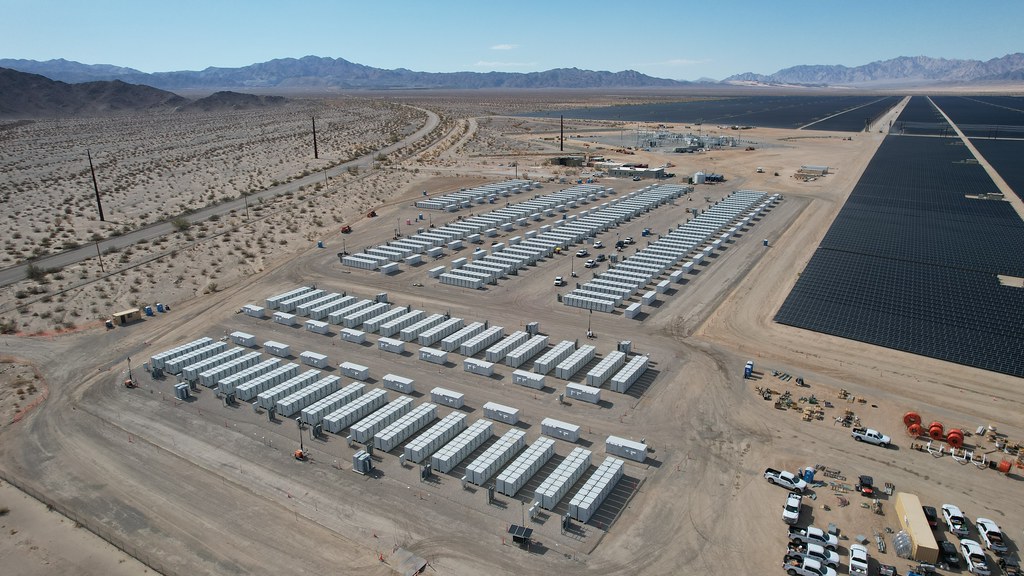
Representative image: BLM California / Flickr (public domain).
Related research
India Battery Energy Storage System Market | India Solar Cell Manufacturing Market